Only 16% of Americans Say AI Will Be Good for Society: A Warning From Pew Research
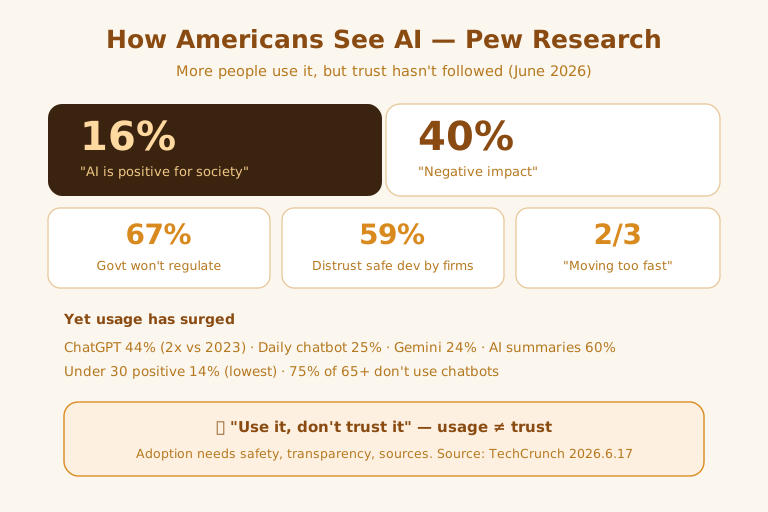
Just 16% of U.S. adults believe AI will have a positive impact on society over the next 20 years. Reported by TechCrunch on June 17, 2026, this Pew Research finding shows that roughly 40% expect a negative impact. Usage is climbing fast, but trust lags far behind it. That "usage-trust gap" is the heart of the survey.
What the numbers say: 16% positive vs. 44% using it
Within a single survey, positive expectations of 16% sit right next to 44% ChatGPT usage. Normally a new product wins more goodwill the more people try it, yet this data runs straight against that instinct. The user base doubled while sentiment stayed shut. Whether to read this mismatch as a contradiction or as a mature "useful but unnerving" double judgment is the first fork in interpretation.
How you read the 40% negative figure matters too. The opposite of 16% positive is not simply 40% negative; a large group sits in between, withholding judgment. Public opinion, in other words, looks less like confident opposition and more like a wide gray zone, and which way that zone tips will decide future adoption.
The real target of distrust is control, not the technology
Sixty-seven percent distrust of regulators, 59% distrust of companies, and about two-thirds saying development moves too fast. Overlay these three figures and a single direction emerges. What people fear is not what AI can do, but who is holding it and how.
For companies, that framing may be a relief. Sentiment that rejects the technology itself leaves little room to improve, but doubt about controllability can be reversed with transparency and safeguards. The catch is that such trust is rebuilt only through verifiable action, not marketing copy.
How to read the split by generation and gender
Positive expectations are lowest among those under 30 at 14%, while about 75% of people 65 and older never use chatbots at all. Daily usage splits 27% for men and 20% for women. We often assume younger cohorts are the AI-friendly ones, yet the fact that the heaviest users are the least optimistic unsettles that assumption. More contact may have exposed limits before it raised hopes.
What this means for the Korean market
The survey is U.S. data, but its skeleton of regulatory distrust and pace anxiety transfers cleanly to Korea. Even a domestic service that succeeds at growing its user base must clear the second gate of trust separately. The high non-usage rate among older adults, in particular, reads as a signal that headroom is still open while the entry barrier is just as pronounced.
The implication for content creators is equally clear. As the 16% figure shows, usage does not equal trust, and transparent source attribution that shows what you build and how becomes a precondition for adoption. The core of the pessimism is doubt about controllability rather than the technology itself.
References: TechCrunch — Only 16% of Americans think AI will have a positive impact (2026.6.17) · The Verge — Pew Research on AI usage

AI & tech,
read in depth
Beyond the headlines — into the context and the structure
AGI Soon As Possible · asapai.co.kr